
- Home
- People
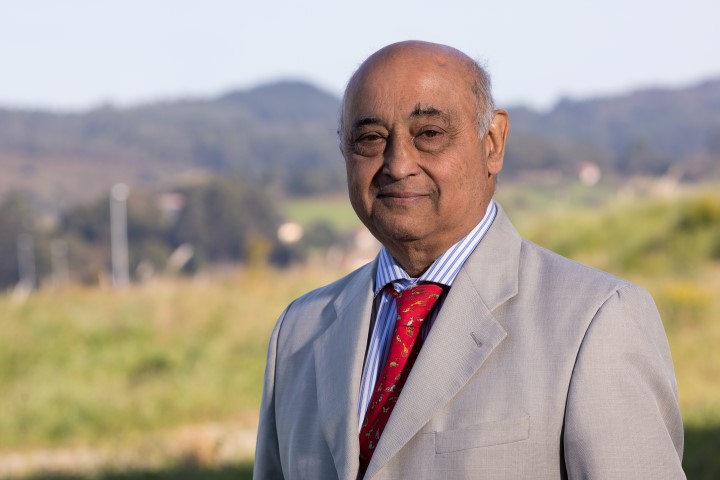
Anil Markandya
- Position:
Research Professor
Distinguished Ikerbasque Professor - Main Research Field:
Environmental economics and resources, Climate Change. - BC3 Research Line:
4. Research Line Adaptation Lab - Contact information:
Email address: anil.markandya@bc3research.org
Contact phone: +34 94-401 46 90 ext. 117 - Scopus Author ID: 56349420200
- ORCID ID: 0000-0001-6304-7103
- Download CV:
 Anil_Markandya_CV-REV12015
Short CV
Professor Markandya is a resource economist who has worked in this field for over thirty years and is acknowledged as one of the leading authorities.
He graduated from the London School of Economics with a Master of Science in Econometrics in 1968 and was awarded his Ph.D. on the Economics of the Environment in 1975.
Since then he has divided his time between academic and advisory work. On the academic side he has published widely in the areas of climate change, environmental valuation, environmental policy, energy and environment, green accounting, macroeconomics and trade. Some of his best-known works include, ´Blueprint for a Green Economy’, ´Green Accounting in Europe’, ´Reconciling Trade and Development’ and ´Cleaning the Ganges’.
He has held academic positions at the universities of Princeton, Berkeley and Harvard in the US and at University College London and Bath University in the UK.
He was a lead author for Chapters of the 3rd and 4th IPCC Assessment Reports on Climate Change.
He was appointed the Executive Director for the Basque Centre for Climate Change in April 2008.
Professor Markandya has worked extensively on climate change and energy and environment issues and has received a number of awards.
He was one of the core team that drafted the IPCC 4th Assessment that was awarded the Nobel Peace Prize in 2007.
Recently he was author of a paper on climate regulation that was awarded 2nd Prize at the World Energy Council in Rome in November 2007.
In 2008 he was nominated by Cambridge University as one of the 50 most influential thinkers on sustainability in the world.
In 2012 he was made President Elect of the European Association of Environmental & Resource Economists (EAERE), his two year term as President beginning January 2014.
Professor Markandya has also been an advisor to many national and international organizations, including all the international development banks, UNDP, the EU and the governments of India and the UK. At the World Bank he was a Lead Advisor and worked closely on energy and environmental issues with many governments in Asia, Central Europe and the Former Soviet Union.
Journal Articles
- 2025
- Markandya, A., Cavalli, L., Bhattacharya, A., Galinato, G., Farnia, L. 2025. Links between the sustainable development goals: An analysis for Italy. Sustainable Development. 33. (1) 1068-1084. DOI (10.1002/sd.3162).
- van Daalen, K.R., Kriit, H.K., Chen-Xu, J., Semenza, J.C., Nilsson, M., Dasandi, N., Jankin, S., Markandya, A., Antó, J.M., Rocklöv, J., Tonne, C. 2025. Europe's climate leadership in an ‘America first’ era. Lancet Regional Health Europe. 51. DOI (10.1016/j.lanepe.2025.101257).
- 2024
- Banerjee, O., Cicowiez, M., Honeck, E. C., Dechjejaruwat, R., Markandya, A., Pollitt, H., & Muthukumara, M. S. 2024. Arresting Environmental Degradation to Build Wealth in Thailand. Science of The Total Environment. 956. (1) 177386. DOI (https://doi.org/10.1016/j.scitotenv.2024.177386).
- Banerjee, O., Cicowiez, M., Honeck, E.C., Dechjejaruwat, R., Markandya, A., Pollitt, H., Muthukumara, M.S. 2024. Arresting environmental degradation to build wealth in Thailand. Science of the Total Environment. 956. DOI (10.1016/j.scitotenv.2024.177386).
- Markandya, A. 2024. Mobilising Finance for Global Biodiversity Targets. Ekonomiaz. 106. (2) 104-128. DOI (10.69810/ekz.1485).
- Onofri, L., Ojeda, C., Ruiz-Gauna, I., Greno, F., & Markandya, A. 2024. A Life Cycle and Economic Assessment of the Peggy Guggenheim Collection in Venice for Environmental and Economic Sustainability. Sustainability. 16. (16) 6735. DOI (10.3390/su16166735).
- Onofri, L., Markandya, A. 2024. Computing the social costs of carbon through Coase bargaining in the context of an offsetting program in the Venetian lagoon. Humanities and Social Sciences Communications. 11. (1) DOI (10.1057/s41599-024-03870-0).
- Onofri, L., Ojeda, C., Ruiz-Gauna, I., Greno, F., Markandya, A. 2024. A Life Cycle and Economic Assessment of the Peggy Guggenheim Collection in Venice for Environmental and Economic Sustainability. Sustainability Switzerland. 16. (16) DOI (10.3390/su16166735).
- van Daalen, K.R., Tonne, C., Semenza, J.C., Rocklöv, J., Markandya, A., Dasandi, N., Jankin, S., Achebak, H., Ballester, J., Bechara, H., Beck, T.M., Callaghan, M.W., Carvalho, B.M., Chambers, J., Pradas, M.C., Courtenay, O., Dasgupta, S., Eckelman, M.J., Farooq, Z., Fransson, P., Gallo, E., Gasparyan, O., Gonzalez-Reviriego, N., Hamilton, I., Hänninen, R., Hatfield, C., He, K., Kazmierczak, A., Kendrovski, V., Kennard, H., Kiesewetter, G., Kouznetsov, R., Kriit, H.K., Llabrés-Brustenga, A., Lloyd, S.J., Batista, M.L., Maia, C., Martinez-Urtaza, J., Mi, Z., Milà, C., Minx, J.C., Nieuwenhuijsen, M., Palamarchuk, J., Pantera, D.K., Quijal-Zamorano, M., Rafaj, P., Robinson, E.J.Z., Sánchez-Valdivia, N., Scamman, D., Schmoll, O., Sewe, M.O., Sherman, J.D., Singh, P., Sirotkina, E., Sjödin, H., Sofiev, M., Solaraju-Murali, B., Springmann, M., Treskova, M., Triñanes, J., Vanuytrecht, E., Wagner, F., Walawender, M., Warnecke, L., Zhang, R., Romanello, M., Antó, J.M., Nilsson, M., Lowe, R. 2024. The 2024 Europe report of the Lancet Countdown on health and climate change: unprecedented warming demands unprecedented action. Lancet Public Health. 9 (7) e495-e522. DOI (10.1016/S2468-2667(24)00055-0).
- 2023
- Foudi, S., McCartney, M., Markandya, A., Pascual, U. 2023. The impact of multipurpose dams on the values of nature's contributions to people under a water-energy-food nexus framing. Ecological Economics. 206. DOI (10.1016/j.ecolecon.2023.107758).
- Sampedro, J., Markandya, A., Rodés-Bachs, C., Van de Ven, D.J. 2023. Short-term health co-benefits of existing climate policies: the need for more ambitious and integrated policy action. Lancet Planetary Health. 7 (7) e540-e541. DOI (10.1016/S2542-5196(23)00126-2).
- 2022
- Longo, A., Mitchell, E., Markandya, A., Galarraga, I. 2022. One Size Does Not Fit All: Financial Incentives Needed to Change Physical Exercise Levels for Different Groups. Medical Decision Making. 42. (1) 68-79. DOI (10.1177/0272989X211011606).
- van Daalen, K.R., Romanello, M., Rocklöv, J., Semenza, J.C., Tonne, C., Markandya, A., Dasandi, N., Jankin, S., Achebak, H., Ballester, J., Bechara, H., Callaghan, M.W., Chambers, J., Dasgupta, S., Drummond, P., Farooq, Z., Gasparyan, O., Gonzalez-Reviriego, N., Hamilton, I., Hänninen, R., Kazmierczak, A., Kendrovski, V., Kennard, H., Kiesewetter, G., Lloyd, S.J., Lotto Batista, M., Martinez-Urtaza, J., Milà, C., Minx, J.C., Nieuwenhuijsen, M., Palamarchuk, J., Quijal-Zamorano, M., Robinson, E.J.Z., Scamman, D., Schmoll, O., Sewe, M.O., Sjödin, H., Sofiev, M., Solaraju-Murali, B., Springmann, M., Triñanes, J., Anto, J.M., Nilsson, M., Lowe, R. 2022. The 2022 Europe report of the Lancet Countdown on health and climate change: towards a climate resilient future. Lancet Public Health. 7 (11) e942-e965. DOI (10.1016/S2468-2667(22)00197-9).
- 2021
- Markanday, A., Markandya, A., De Murieta, E.S., Galarraga, I. 2021. Accounting for the effects of employment, equity, and risk aversion in cost-benefit analysis: An application to an adaptation project. Journal of Benefit Cost Analysis. 12. (2) 313-334-334. DOI (10.1017/bca.2020.32).
- Markandya, A., Mueller, A., Salcone, J., Thambi, S., Hussain, S. 2021. COVID-19 and climate change challenges or opportunities for economic recovery. Metode. (12) 129-135-135. DOI (10.7203/metode.12.18946).
- Markandya, A., Rübbelke, D. 2021. Preface. Climate and Development. v-vi. DOI (10.1142/9789811240553_fmatter).
- Markandya, A., Salcone, J., Hussain, S., Mueller, A., Thambi, S. 2021. Covid, the Environment and Food Systems: Contain, Cope and Rebuild Better. Frontiers in Environmental Science. 9 DOI (10.3389/fenvs.2021.674432).
- Tepes, A., Galarraga, I., Markandya, A., Sánchez, M.J.S. 2021. Costs and benefits of soil protection and sustainable land management practices in selected European countries: Towards multidisciplinary insights. Science of the Total Environment. 756. DOI (10.1016/j.scitotenv.2020.143925).
- 2020
- Buchholz, W., Markandya, A., Rübbelke, D., Vögele, S. 2020. Preface. Springer Climate. vii-viii. DOI (10.1021/bk-1994-0573.pr001).
- Sampedro, J., Smith, S.J., Arto, I., González-Eguino, M., Markandya, A., Mulvaney, K.M., Pizarro-Irizar, C., Van Dingenen, R. 2020. Health co-benefits and mitigation costs as per the Paris Agreement under different technological pathways for energy supply. Environment International. 136. DOI (10.1016/j.envint.2020.105513).
- 2019
- Abadie, L.M., Galarraga, I., Markandya, A., Sainz De Murieta, E. 2019. Risk measures and the distribution of damage curves for 600 European coastal cities. Environmental Research Letters. 14. (6) DOI (10.1088/1748-9326/ab185c).
- Abadie, L.M., Markandya, A., Neumann, M.B. 2019. Accounting for economic factors in socio-hydrology: Optimization under uncertainty and climate change. Water Switzerland. 11. (10) DOI (10.3390/w11102073).
- Arto, I., García-Muros, X., Cazcarro, I., González, M., Markandya, A., Hazra, S. 2019. The socioeconomic future of deltas in a changing environment. Science of the Total Environment. 648. 1284-1296-1296. DOI (10.1016/j.scitotenv.2018.08.139).
- Kiuila, O., Markandya, A., Ščasný, M. 2019. Taxing air pollutants and carbon individually or jointly: results from a CGE model enriched by an emission abatement sector. Economic Systems Research. 31. (1) 21-43-43. DOI (10.1080/09535314.2018.1508000).
- Markanday, A., Galarraga, I., Chiabai, A., Sainz de Murieta, E., Lliso, B., Markandya, A. 2019. Determining discount rates for the evaluation of natural assets in land-use planning: An application of the Equivalency Principle. Journal of Cleaner Production. 230. 672-684-684. DOI (10.1016/j.jclepro.2019.05.107).
- Markanday, A., Galarraga, I., Markandya, A. 2019. A CRITICAL REVIEW of COST-BENEFIT ANALYSIS for CLIMATE CHANGE ADAPTATION in CITIES. Climate Change Economics. 10. (4) DOI (10.1142/S2010007819500143).
- Markandya, A., De Cian, E., Drouet, L., Polanco-Martínez, J.M., Bosello, F. 2019. Building Risk into the Mitigation/Adaptation Decisions simulated by Integrated Assessment Models. Environmental and Resource Economics. 74. (4) 1687-1721-1721. DOI (10.1007/s10640-019-00384-1).
- Sandhu, H., Müller, A., Sukhdev, P., Merrigan, K., Tenkouano, A., Kumar, P., Hussain, S., Zhang, W., Pengue, W., Gemmill-Herren, B., Hamm, M.W., Tirado von der Pahlen, M.C., Obst, C., Sharma, K., Gundimeda, H., Markandya, A., May, P., Platais, G., Weigelt, J. 2019. The future of agriculture and food: Evaluating the holistic costs and benefits. Anthropocene Review. 6 (3) 270-278-278. DOI (10.1177/2053019619872808).
- 2018
- Corradini, M., Costantini, V., Markandya, A., Paglialunga, E., Sforna, G. 2018. A dynamic assessment of instrument interaction and timing alternatives in the EU low-carbon policy mix design. Energy Policy. 120. 73-84-84. DOI (10.1016/j.enpol.2018.04.068).
- Costantini, V., Markandya, A., Paglialunga, E., Sforna, G. 2018. Impact and distribution of climatic damages: a methodological proposal with a dynamic CGE model applied to global climate negotiations. Economia Politica. 35. (3) 809-843-843. DOI (10.1007/s40888-018-0129-z).
- Galarraga, I., Sainz De Murieta, E., Markandya, A., Abadie, L.M. 2018. Addendum to 'Understanding risks in the light of uncertainty: Low-probability, high-impact coastal events in cities'. Environmental Research Letters. 13. (2) DOI (10.1088/1748-9326/aaa513).
- Lee, J., Lim, C.H., Kim, G.S., Markandya, A., Chowdhury, S., Kim, S.J., Lee, W.K., Son, Y. 2018. Economic viability of the national-scale forestation program: The case of success in the Republic of Korea. Ecosystem Services. 29. 40-46-46. DOI (10.1016/j.ecoser.2017.11.001).
- Markandya, A., Dhavala, K., Palma, A. 2018. The role of flexible biofuel policies in meeting biofuel mandates. Aims Energy. 6 (3) 530-550-550. DOI (10.3934/ENERGY.2018.3.530).
- Markandya, A., Sampedro, J., Smith, S.J., Van Dingenen, R., Pizarro-Irizar, C., Arto, I., González-Eguino, M. 2018. Health co-benefits from air pollution and mitigation costs of the Paris Agreement: a modelling study. Lancet Planetary Health. 2 (3) e126-e133-133. DOI (10.1016/S2542-5196(18)30029-9).
- 2017
- Antimiani, A., Costantini, V., Markandya, A., Paglialunga, E., Sforna, G. 2017. The Green Climate Fund as an effective compensatory mechanism in global climate negotiations. Environmental Science and Policy. 77. 49-68-68. DOI (10.1016/j.envsci.2017.07.015).
- García-Muros, X., Markandya, A., Romero-Jordán, D., González-Eguino, M. 2017. The distributional effects of carbon-based food taxes. Journal of Cleaner Production. 140. 996-1006-1006. DOI (10.1016/j.jclepro.2016.05.171).
- Garmendia, M., Sauzade, D., Beaumont, N., Boteler, B., Pascual, M., Boudine, T., Breil, M., Furlan, E., Kontogianni, A., Krüger, I., Le Tellier, J., Gileva, E., March, D., Roeleveld, G., Ronco, P., Shivarov, A., Skourtos, M., Markandya, A. 2017. The Adaptive Marine Policy (AMP) toolbox: Supporting policy-makers developing adaptive policies in the Mediterranean and Black Sea. Marine Policy. 84. 99-109-109. DOI (10.1016/j.marpol.2017.07.009).
- González-Eguino, M., Capellán-Pérez, I., Arto, I., Ansuategi, A., Markandya, A. 2017. Industrial and terrestrial carbon leakage under climate policy fragmentation. Climate Policy. 17. S148-S169-169. DOI (10.1080/14693062.2016.1227955).
- 2016
- Cortés-Avizanda, A., Blanco, G., Devault, T.L., Markandya, A., Virani, M.Z., Brandt, J., Donázar, J.A. 2016. Supplementary feeding and endangered avian scavengers: Benefits, caveats, and controversies. Frontiers in Ecology and the Environment. 14. (4) 191-199-199. DOI (10.1002/fee.1257).
- Markandya, A., Arto, I., González-Eguino, M., Román, M.V. 2016. Towards a green energy economy? Tracking the employment effects of low-carbon technologies in the European Union. Applied Energy. 179. 1342-1350-1350. DOI (10.1016/j.apenergy.2016.02.122).
- Markandya, A., Galarraga, I., Abadie, L.M., Lucas, J., Spadaro, J.V. 2016. What role can taxes and subsidies play in changing diets?. Finanzarchiv. 72. (2) 175-210-210. DOI (10.1628/001522116X14581329755499).
- Mundaca, L., Markandya, A. 2016. Assessing regional progress towards a ‘Green Energy Economy’. Applied Energy. 179. 1372-1394-1394. DOI (10.1016/j.apenergy.2015.10.098).
- Mundaca, L., Neij, L., Markandya, A., Hennicke, P., Yan, J. 2016. Towards a Green Energy Economy? Assessing policy choices, strategies and transitional pathways. Applied Energy. 179. 1283-1292-1292. DOI (10.1016/j.apenergy.2016.08.086).
- Taheripour, Farzad; Hertel, Thomas W., Narayanan, Badri; Sahin, Sebnem; Markandya, Anil; Mitra, Bijon Kumer. 2016. Economic and Land Use Impacts of Improving Water Use Efficiency in Irrigation in South Asia. Journal Of Environmental Protection. 07. (11) 1571-1591. DOI (10.4236/jep.2016.711130).
- 2015
- Green, R., Milner, J., Dangour, A.D., Haines, A., Chalabi, Z., Markandya, A., Spadaro, J., Wilkinson, P. 2015. The potential to reduce greenhouse gas emissions in the UK through healthy and realistic dietary change. Climatic Change. 129. (1-2) 253-265-265. DOI (10.1007/s10584-015-1329-y).
- Longo, A., Hoyos, D., Markandya, A. 2015. Sequence effects in the valuation of multiple environmental programs using the contingent valuation method. Land Economics. 91. (1) 20-35-35. DOI (10.3368/le.91.1.20).
- Markandya, A., Antimiani, A., Costantini, V., Martini, C., Palma, A., Tommasino, M.C. 2015. Analyzing trade-offs in international climate policy options: The case of the green climate fund. World Development. 74. 93-107-107. DOI (10.1016/j.worlddev.2015.04.013).
- Markandya, A., Labandeira, X., Ramos, A. 2015. Policy instruments to foster energy efficiency. Green Energy and Technology. 164. 93-110. DOI (10.1007/978-3-319-03632-8_4).
- Milner, J., Green, R., Dangour, A.D., Haines, A., Chalabi, Z., Spadaro, J., Markandya, A., Wilkinson, P. 2015. Health effects of adopting low greenhouse gas emission diets in the UK. BMJ Open. 5 (4) e007364. DOI (10.1136/BMJOPEN-2014-007364).
- 2014
- Altemeyer-Bartscher, M., Markandya, A., Rübbelke, D.T.G. 2014. International Side-payments to Improve Global Public Good Provision when Transfers are Refinanced through a Tax on Local and Global Externalities. International Economic Journal. 28. (1) 71-93-93. DOI (10.1080/10168737.2012.759986).
- Antimiani, A., Costantini, V., Markandya, A., Martini, C., Palma, A., Tommasino, M.C. 2014. Gdyn-E: A model for the economic assessment of climate policies. Chemical Engineering Transactions. 42. 115-120. DOI (10.3303/CET1442020).
- Bastianin, A., Manera, M., Markandya, A., Scarpa, E. 2014. Evaluating the empirical performance of alternative econometric models for oil price forecasting. Lecture Notes in Energy. 54. 157-181. DOI (10.1007/978-3-642-55382-0_7).
- Green, Rosemary; Milner, James; Dangour, Alan; Haines, Andy; Chalabi, Zaid; Markandya, Anil; Spadaro, Joseph; Wilkinson, Paul. 2014. Health implications of adopting nutritious, low-carbon diets in the U.K. (255.3). FASEB JOURNAL. 28. (1) 2553-2553. DOI (10.1096/fasebj.28.1_supplement.255.3).
- Markandya, A. 2014. Environment and development economics: Past, present and future challenges. Environment and Development Economics. 19. (3) 328-329-329. DOI (10.1017/S1355770X14000333).
- Markandya, A., González-Eguino, M., Criqui, P., Mima, S. 2014. Low climate stabilisation under diverse growth and convergence scenarios. Energy Policy. 64. 288-301-301. DOI (10.1016/j.enpol.2013.07.046).
- Remais, J.V., Hess, J.J., Ebi, K.L., Markandya, A., Balbus, J.M., Wilkinson, P., Haines, A., Chalabi, Z. 2014. Estimating the health effects of greenhouse gas mitigation strategies: Addressing parametric, model, and valuation challenges. Environmental Health Perspectives. 122. (5) 447-455-455. DOI (10.1289/ehp.1306744).
- 2013
- Chiabai, A., Galarraga, I., Markandya, A., Pascual, U. 2013. The Equivalency Principle for Discounting the Value of Natural Assets: An Application to an Investment Project in the Basque Coast. Environmental and Resource Economics. 56. (4) 535-550-550. DOI (10.1007/s10640-012-9589-8).
- Heres, D.R., Ortiz, R.A., Markandya, A. 2013. Deforestation in private lands in Brazil and policy implications for REDD programs: An empirical assessment of land use changes within farms using an econometric model1. International Forestry Review. 15. (2) 169-181-181. DOI (10.1505/146554813806948468).
- Markandya, A., González-Eguino, M., Escapa, M. 2013. From shadow to green: Linking environmental fiscal reforms and the informal economy. Energy Economics. 40. S108-S118-118. DOI (10.1016/j.eneco.2013.09.014).
- Mundaca, L., Markandya, A., Nørgaard, J. 2013. Walking away from a low-carbon economy? Recent and historical trends using a regional decomposition analysis. Energy Policy. 61. 1471-1480-1480. DOI (10.1016/j.enpol.2013.04.083).
- Refsgaard, J.C., Arnbjerg-Nielsen, K., Drews, M., Halsnæs, K., Jeppesen, E., Madsen, H., Markandya, A., Olesen, J.E., Porter, J.R., Christensen, J.H. 2013. The role of uncertainty in climate change adaptation strategies-A Danish water management example. Mitigation and Adaptation Strategies for Global Change. 18. (3) 337-359-359. DOI (10.1007/s11027-012-9366-6).
- 2012
- Abdullah, S., Markandya, A. 2012. Rural electrification programmes in Kenya: Policy conclusions from a valuation study. Energy for Sustainable Development. 16. (1) 103-110-110. DOI (10.1016/j.esd.2011.10.007).
- Brander, L.M., Bräuer, I., Gerdes, H., Ghermandi, A., Kuik, O., Markandya, A., Navrud, S., Nunes, P.A.L.D., Schaafsma, M., Vos, H., Wagtendonk, A. 2012. Using Meta-Analysis and GIS for Value Transfer and Scaling Up: Valuing Climate Change Induced Losses of European Wetlands. Environmental and Resource Economics. 52. (3) 395-413-413. DOI (10.1007/s10640-011-9535-1).
- Grasso, M., Manera, M., Chiabai, A., Markandya, A. 2012. The health effects of climate change: A survey of recent quantitative research. International Journal of Environmental Research and Public Health. 9 (5) 1523-1547-1547. DOI (10.3390/ijerph9051523).
- Longo, A., Hoyos, D., Markandya, A. 2012. Willingness to Pay for Ancillary Benefits of Climate Change Mitigation. Environmental and Resource Economics. 51. (1) 119-140-140. DOI (10.1007/s10640-011-9491-9).
- Markandya, A. 2012. Externalities from electricity generation and renewable energy. Methodology and application in Europe and Spain. Cuadernos Economicos De Ice. 83. 85-100.
- Markandya, A., Nunes, P. a. L. D. 2012. Is the value of bioprospecting contracts too low?. International Journal Of Ecological Economics And Statistics. 26. (3) 85-102.
- Markandya, A., Rübbelke, D.T.G. 2012. Impure public technologies and environmental policy. Journal of Economic Studies. 39. (2) 128-143-143. DOI (10.1108/01443581211222626).
- Markandya, Anil; Nunes, Paulo A. L. D. 2012. Editorial: Introduction to the Special Issue on the Socioeconomics and Management of Bioprospecting. International Journal Of Ecological Economics And Statistics. 26. (3) 1-1.
- Martin-Ortega, J., González-Eguino, M., Markandya, A. 2012. The costs of drought: The 2007/2008 case of Barcelona. Water Policy. 14. (3) 539-560-560. DOI (10.2166/wp.2011.121).
- Ojea, E., Ghosh, R. K., Agrawal, B. B., Joshi, P. K., Markandya, A. 2012. Setting Targets for Costing Ecosystem Adaptation. International Journal Of Ecological Economics And Statistics. 24. (1) 27-45.
- Ojea, E., Ruiz-Benito, P., Markandya, A., Zavala, M.A. 2012. Wood provisioning in Mediterranean forests: A bottom-up spatial valuation approach. Forest Policy and Economics. 20. 78-88-88. DOI (10.1016/j.forpol.2012.03.003).
- 2011
- Bosetti, V., Lubowski, R., Golub, A., Markandya, A. 2011. Linking reduced deforestation and a global carbon market: Implications for clean energy technology and policy flexibility. Environment and Development Economics. 16. (4) 479-505-505. DOI (10.1017/S1355770X10000549).
- Chiabai, A., Travisi, C.M., Markandya, A., Ding, H., Nunes, P.A.L.D. 2011. Economic Assessment of Forest Ecosystem Services Losses: Cost of Policy Inaction. Environmental and Resource Economics. 50. (3) 405-445-445. DOI (10.1007/s10640-011-9478-6).
- Galarraga, I., Gonzalez-Eguino, M., Markandya, A. 2011. The role of regional governments in climate change policy. Environmental Policy and Governance. 21. (3) 164-182-182. DOI (10.1002/eet.572).
- Galarraga, I., González-Eguino, M., Markandya, A. 2011. Willingness to pay and price elasticities of demand for energy-efficient appliances: Combining the hedonic approach and demand systems. Energy Economics. 33. (SUPPL. 1) S66-S74-74. DOI (10.1016/j.eneco.2011.07.028).
- Galarraga, I., Osés, N., Markandya, A., Chiabai, A., Khatun, K. 2011. Contributions from economics of adaptation to decision making: An example for the autonomous community of the Basque Country. Economia Agraria Y Recursos Naturales. 11. (1) 113-142-142. DOI (10.7201/earn.2011.01.06).
- Galarraga, Ibon; González-Eguino, Mikel; Markandya, Anil. 2011. De Cancún a Durban en un largo camino contra el cambio climático. Economistas. 29. (127) 61-64.
- Halsnæs, K., Markandya, A., Shukla, P. 2011. Introduction: Sustainable Development, Energy, and Climate Change. World Development. 39. (6) 983-986-986. DOI (10.1016/j.worlddev.2010.01.006).
- Jiahua, P., Yan, Z., Markandya, A. 2011. Adaptation approaches to climate change in China: An operational framework. Economia Agraria Y Recursos Naturales. 11. (1) 99-112-112. DOI (10.7201/earn.2011.01.05).
- Markandya A. 2011. Equity and Distributional Implications of Climate Change. WORLD DEVELOPMENT. 39. (6) 1051-1060. DOI (10.1016/j.worlddev.2010.01.005).
- Markandya, A., Ortiz, R.A. 2011. Beyond current practices: The role of the external costs of carbon in climate decision making. Journal of Industrial Ecology. 15. (5) 666-668-668. DOI (10.1111/j.1530-9290.2011.00392.x).
- Markandya, Anil; Ponczek, Vladimir; Yi, Soonhwa. 2011. What Are the Links between Aid Volatility and Growth?. The Journal Of Developing Areas. 44. (2) 41-68. DOI (10.1596/1813-9450-5201).
- Ortiz, R.A., Golub, A., Lugovoy, O., Markandya, A., Wang, J. 2011. DICER: A tool for analyzing climate policies. Energy Economics. 33. (SUPPL. 1) S41-S49-49. DOI (10.1016/j.eneco.2011.07.025).
- Trærup, S.L.M., Ortiz, R.A., Markandya, A. 2011. The costs of climate change: A study of cholera in Tanzania. International Journal of Environmental Research and Public Health. 8 (12) 4386-4405-4405. DOI (10.3390/ijerph8124386).
- 2010
- Bigano A., Cassinelli M., Markandya A., Sferra F. 2010. The role of risk aversion and lay risk in the probabilistic externality assessment for oil tanker routes to Europe. JOURNAL OF TRANSPORT ECONOMICS AND POLICY. 44. (1) 93-118.
- Galarraga, I., Markandya, A. 2010. The Road to Copenhagen-COP 15. Elhuyar Aldizkaria.
- Hintermann B., Alberini A., Markandya A. 2010. Estimating the value of safety with labour market data: Are the results trustworthy?. APPLIED ECONOMICS. 42. (9) 1085-1100. DOI (10.1080/00036840802260940).
- Markandya, A., Pemberton, M. 2010. Energy security, energy modelling and uncertainty. Energy Policy. 38. (4) 1609-1613-1613. DOI (10.1016/j.enpol.2009.01.046).
- Markandya, Anil. 2010. Measuring Sustainability. Equilibri. (1/2010) 42-48. DOI (10.1406/31913).
- 2009
- Bastianin, Andrea; Cattaneo, Cristina; Markandya, Anil. 2009. Are China and Europe Converging?. China Economist.
- Frey, G., Manera, M., Markandya, A., Scarpa, E. 2009. Econometric models for oil price forecasting: A critical survey. Cesifo Forum. 10. (1) 29-44-44.
- Galarraga, I., Markandya, A. 2009. El cambio climático y su importancia socioeconómica. Ekonomiaz: Revista Vasca De Economía. 71. 14-39.
- Haines, A., McMichael, A.J., Smith, K.R., Roberts, I., Woodcock, J., Markandya, A., Armstrong, B.G., Campbell-Lendrum, D., Dangour, A.D., Davies, M., Bruce, N., Tonne, C., Barrett, M., Wilkinson, P. 2009. Public health benefits of strategies to reduce greenhouse-gas emissions: overview and implications for policy makers. Lancet. 374. (9707) 2104-2114-2114. DOI (10.1016/S0140-6736(09)61759-1).
- Kiuila O., Markandya A. 2009. Can transition economies implement a carbon tax and hope for a double dividend? The case of Estonia. APPLIED ECONOMICS LETTERS. 16. (7) 705-709. DOI (10.1080/13504850701221816).
- Markandya A. 2009. Can climate change be reversed under capitalism?. DEVELOPMENT AND CHANGE. 40. (6) 1139-1152. DOI (10.1111/j.1467-7660.2009.01615.x).
- Markandya, A., Armstrong, B.G., Hales, S., Chiabai, A., Criqui, P., Mima, S., Tonne, C., Wilkinson, P. 2009. Public health benefits of strategies to reduce greenhouse-gas emissions: low-carbon electricity generation. Lancet. 374. (9706) 2006-2015-2015. DOI (10.1016/S0140-6736(09)61715-3).
- Markandya, A., Chiabai, A. 2009. Valuing climate change impacts on human health: Empirical evidence from the literature. International Journal of Environmental Research and Public Health. 6 (2) 759-786-786. DOI (10.3390/ijerph6020759).
- Markandya, A., Ortiz, R.A., Mudgal, S., Tinetti, B. 2009. Analysis of tax incentives for energy-efficient durables in the EU. Energy Policy. 37. (12) 5662-5674-5674. DOI (10.1016/j.enpol.2009.08.031).
- Markandya, A; Ferreres, Elias; Rojo, Juan; Goñi, Felix. 2009. El cambio climático a debate. Cicnetwork. Ciencia Y Tecnología. 5 32-42.
- Markandya, Anil. 2009. Making Agricultural Systems More Environmentally Sustainable. Rivista Dell´ Associazione Rossi-Doria. 1 (6) DOI (10.3280/QU2009-001002).
- Markandya, Anil; Ricci, Elena Claire. 2009. Green taxes on aviation : the case of Italy ; the proposal of the green taxation matrix. Rivista Di Politica Economica. 99. (7/9) 171-209.
- Ortiz, R.A., Markandya, A., Hunt, A. 2009. Willingness to pay for mortality risk reduction associated with air pollution in São Paulo. Revista Brasileira De Economia. 63. (1) 3-22-22. DOI (10.1590/S0034-71402009000100001).
- Ramos, David Hoyos; Longo, Alberto; Markandya, Anil; Gonzalez Eguino, Mikel. 2009. Concienciación pública y aceptabilidad de medidas para la reducción de emisiones de gases de efecto invernadero: el caso del País Vasco. Papeles De Economía Española. 21. (121) 68-78.
- 2008
- Longo A., Markandya A., Petrucci M. 2008. The internalization of externalities in the production of electricity: Willingness to pay for the attributes of a policy for renewable energy. ECOLOGICAL ECONOMICS. 67. (1) 140-152. DOI (10.1016/j.ecolecon.2007.12.006).
- Markandya A., Golub A. 2008. Notes on environmental regulation and growth. International Journal Of Global Environmental Issues. 8 (4) 335-354. DOI (10.1504/IJGENVI.2008.019368).
- Markandya, A. 2008. Il Mercato Del Carbonio: Overview Sui Principali Carbon Funds Esistenti E Sui Progetti Finanziati. Enea, Energia, Ambiente E Innovazione. 54. 4-11.
- Smith S. 2008. Restraining the golden weed: Taxation and regulation of tobacco. FinanzArchiv. 64. (4) 476-507. DOI (10.1628/001522108X397697).
Books and Specials
- 2021
- Anil Markandya and Dirk Rubbelke. 2021 In: Richard Tol. In: Climate and Development. 1 Singapore. World Scientific. 509. ISBN 978-981-124-055-3.
- 2019
- Buchholz. W., , Markandya,A., Rübbelke,D., Vögele, S. 2019 In: Dodson, J. In: Ancillary Benefits of Climate Policy. 1 Charn, Switzerland. Springer. 345. ISBN 978-3-030-30977-0.
- 2018
- M. Mani, S. Bandyopadhyay, S. Chonabayashi, A. Markandya and T. Mosier. 2018 South Asia's Hotspots: The Impact of Temperature and Precipitation Changes on Living Standards. Washington DC, USA. The World Bank. ISBN 978-1-4648-1155-5.
- 2017
- Nunes, P., Markandya, A., Svensson, L. 2017 In: Nunes, P., Markandya, A., Svensson, L. In: Handbook on the Economics and Management of Sustainable Oceans. Edward Elgar Publishing. ISBN 9781786430717.
- 2016
- Markandya, A., Galarraga, I. and Rübbelke, D. 2016 In: Markandya, A., Galarraga, I. and Rübbelke, D. In: Climate Finance: Theory and Practice. Singapore. World Scientific Series on the Economics of Climate Change. 300. ISBN 978-981-4641-80-7.
- 2015
- Arto, I., Rueda-Cantuche, J.M., Amores, A.F., Dietzenbacher, E., Sousa, N., Montinari, L., Markandya, A. 2015 In: - In: EU Exports: Employment and Income (1995-2011). 1st ed. Luxembourg. European Commission. Luxembourg: Publications Office of the European Union. 304. ISBN 978-92-79-44581-1.
- Markandya, A. and Setboonsarng, S. 2015 In: Markandya, A. and Setboonsarng, S. In: Organic Agriculture and Post-2015 Development Goals: Building on the Comparative Advantage of Poor Farmers. 1st ed. Manila, Philippines. Asian Development Bank. 415. ISBN 978-92-9254-979-4.
- 2014
- Markandya, A., Galarraga, I and Sainz de Murieta, E. (eds). 2014 In: Markandya, A., Galarraga, I and Sainz de Murieta, E. (eds). In: Routledge Handbook on Economics of Adaptation to Climate Change. 1st ed. London. Routledge. 464. ISBN 978-0-415-63311-6.
- 2013
- L. Castellucci and A. Markandya (eds). 2013 --. In: A. Markandya and L. Castellucci. In: Environmental taxes and Fiscal Reform (Central Issues in Contemporary Economic Theory and Policy). UK. Palgrave Macmillan. 280. ISBN 978-0-230-39239-7,.
- 2012
- A. Markandya and N. Dale. 2012 --. The Montreal Protocol and the Green Economy: Assessing the Economic Impact and Co-benefits of a Multilateral Agreement. 1st ed. France. United Nations Environment Programme. 77. ISBN 978-92-807-3200-9.
- Markandya, A. and E. Barbier. 2012 A New Blueprint for a Green Economy. London. Routledge. 216. ISBN 978-1849713535.
- 2011
- Galarraga, I., Gonzalez-Eguino, Markandya, A. 2011 --. In: Galarraga, I., Gonzalez-Eguino, Markandya, A. In: Handbook of Sustainable Energy. 1st ed. Cheltenham. Edward Elgard. 640. ISBN 9781849801157.
- 2010
- A.Markandya and Arabinda Mishra. 2010 --. In: TERI. In: Costing Adaptation: Preparing for Climate Change in India. New Delhi. The Energy and Resources Institute (TERI). 258. ISBN 9788179933886.
- Markandya,A. 2010 In: Fabio Cerina, A.Markandya and Michael McAleer. In: The Economics of Sustainable Tourism. Routledge. Routledge. 208. ISBN 978-0415583855.
- Markandya,A. 2010 --. In: Anil Markandya, Andrea Bigano and Roberto Porchia. In: The Social Costs of Electricity: Scenarios and Policy Implications. Uk. Edward Elgar Publisher. 308. ISBN 978-1-84844-350-1.
- 2009
- A.Golub and A.Markandya. 2009 Modeling Environment-Improving Technological Innovations under Uncertainty. London and New York. Routledge. 352. ISBN 415463769.
Book chapters
- 2023
- Anil Markandya, M. Mani, V. Sankaran and P.S. NaraSimhan. 2023 Regional Climate Variabilities in South Asia: A Development Prespective. In: Achiransu Acharyya. In: Environmental Economics in Developing Countries. 1 Abingdon and New York. Routledge. 213-230. ISBN 978-i-18291-9.
- 2021
- R. Boyd and A. Markandya. 2021 Costs and Benefits of Climate Change Impacts and Adaptation. In: F.J. Warren and N. Lulham. In: Canada in a Changing Climate: National Issues Report. Ottawa. Government of Canada. ISBN 978-0-660-38842-7.
- 2020
- Anil Markandya and Jon Sampedro. 2020 Health Co-benefits of Climate Mitigation Policies: Why Is It So Hard to Convince Policy-Makers of Them and What Can Be Done to Change That? . In: Springer. In: Ancillary Benefits of Climate Policy . Springer, Cham. 227-241. ISBN 978-3-030-30977-0.
- 2019
- A. Markandya and D. Pearce. 2019 Development, the Environment and the Social Rate of Discount. In: G. Atkinson and S. Fankhauser . In: Sustainability Economics: The International Library of Critical Writings in Economics. UK. Edward Elgar: UK. 896. ISBN 978-1-786439109.
- Arto, I., Cazcarro, I., Markandya, A., Hazra, S., Bhattacharya, R.N., Osei-Wusu Adjei, P. 2019 Delta Economics and Sustainability. In: Nicholls, R.N., Adger, W.N., Hutton, CW., Hanson, S.E. In: Deltas in the Anthropocene. Palgrave Macmillan. ISBN 978-3-030-23516-1.
- E. Barbier, A. Markandya and D. Pearce. 2019 Environmental Sustainability and Cost-Benefit Analysis. In: G. Atkinson and S. Fankhauser . In: Sustainability Economics: The International Library of Critical Writings in Economics. UK. Edward Elgar: UK. 896. ISBN 978-1-786439109.
- Markandya, A . and Gonzalez-Eguino, M. 2019 Integrated Assessment for Identifying Climate Finance Needs for Loss and Damage: A Critical Review . In: Mechler, R., Bouwer, L.M., Schinko, Th., Surminski, S., Linnerooth-Bayer, J. In: Loss and Damage from Climate Change. 1st ed. . Springer International Publishing. 343-362. ISBN 978-3-319-72026-5.
- Markandya, A. 2019 Natural Capital and the Rate of Discount. In: Kumar, P. In: Mainstreaming Natural Capital and Ecosystem Services into Development Policy. 1 UK. Routledge. 292. ISBN 9781138693111 - CAT# Y286494.
- Markandya, A., Ortiz, R.A., Chiabai, A. 2019 Estimating Environmental Health Costs: General Introduction to Valuation of Human Health Risks. In: Nriagu, J. In: Encyclopedia of Environmental Health. 2 Netherlands. Elsevier. 871-878. ISBN 9780444639516.
- 2018
- F. Taheripour, T.W. Hertel, B. N. Gopalakrishnan, S. Sahin, A. Markandya and B. K. Mitra. 2018 Climate change and water scarcity: growing risks for agricultural based economies in South Asia. In: S. Hsu . In: Routledge Handbook of Sustainable Development in Asia. London and New York. Routledge: Taylor and Francis Group. ISBN 978-1-138-18218-9 .
- Gundimeda, H., Markandya, A. and Bassi, A. 2018 TEEB AgriFood methodology: an overview of evaluation and valuation methods and tools. In: A. Muller, P. Sukhdev, P. Kumar. In: TEEB for Agriculture & Food: Scientific and Economic Foundations. Geneva. UN Environment. ISBN 978-92-807-3702-8.
- Markandya, A. 2018 Targets for Biodiversity and Deforestation. In: Bjorn Lomborg. In: Prioritizing Development: A Cost Benefit Analysis of the United Nations' Sustainable Development Goals. Cambridge and New York. Cambridge University Press. 38-53. ISBN 978-1-108-41545-6.
- Schwarze,R., Meyer, P.B. and Markandya,A. 2018 Economics, Finance and the Private Sector. In: Rosenzweig, C., W. Solecki, P. Romano-Lankao, S. Mehrotra an, S. Dhakal and S. Ali Ibrahim. In: Climate Change and the Cities. 1st ed. Cambridge and New York. Cambridge University Press. 225-254. ISBN 978-1-316-60333-8.
- 2017
- Ojea, E., Pascual, M., March, D., Bitetto, I., Meli, P., Breil, M., Claudet, J.,Markandya, A. 2017 Socioeconomic Impacts of Networks of Marine Protected Areas. In: Goriup, Paul D. In: Management of Marine Protected Areas. Chichester, UK. John Wiley & Sons, Ltd. 103-124. ISBN 978-1-119-07580-6 978-1-119-07577-6.
- Román, M.V., A. Ansuategi and A. Markandya. 2017 Climate finance and the global climate policy. In: A. Markandya, D. Rübbelke and I. Galarraga . In: Climate Finance: Theory and Practice. World Scientific Publishing. ISBN 978-981-4641-82-1.
- 2016
- Arto, I., Capellán-Pérez, I., Filatova, T., González-Eguino, M., Hasselmann, K., Kovalevsky, D., Markandya, A., Moghayer, S.M., Tariku, M.B. 2016 Definitions. In: Winder, N., Liljenström, H. In: Non-linearities and system-flips. Sigtuna, Sweden. Sigtunastifelsen. ISBN 978-91-976048-2-6.
- Arto, I., Capellán-Pérez, I., Filatova, T., González-Eguino, M., Hasselmann, K., Kovalevsky, D., Markandya, A., Moghayer, S.M., Tariku, M.B. 2016 The climate system. In: Winder, N., Liljenström, H. In: Non-linearities and system-flips. Sigtuna, Sweden. Sigtunastifelsen. ISBN 978-91-976048-2-6.
- Arto, I., Capellán-Pérez, I., Filatova, T., González-Eguino, M., Hasselmann, K., Kovalevsky, D., Markandya, A., Moghayer, S.M., Tariku, M.B. 2016 Socio-ecological systems. In: Winder, N., Liljenström, H. In: Non-linearities and system-flips. Sigtuna, Sweden. Sigtunastifelsen. ISBN 978-91-976048-2-6.
- Arto, I., Capellán-Pérez, I., Filatova, T., González-Eguino, M., Hasselmann, K., Kovalevsky, D., Markandya, A., Moghayer, S.M., Tariku, M.B. 2016 Lake systems. In: Winder, N., Liljenström, H. In: Non-linearities and system-flips. Sigtuna, Sweden. Sigtunastifelsen. ISBN 978-91-976048-2-6.
- Arto, I., Capellán-Pérez, I., Filatova, T., González-Eguino, M., Hasselmann, K., Kovalevsky, D., Markandya, A., Moghayer, S.M., Tariku, M.B. 2016 Climate mitigation policies. In: Winder, N., Liljenström, H. In: Non-linearities and system-flips. Sigtuna, Sweden. Sigtunastifelsen. ISBN 978-91-976048-2-6.
- Arto, I., Capellán-Pérez, I., Filatova, T., González-Eguino, M., Hasselmann, K., Kovalevsky, D., Markandya, A., Moghayer, S.M., Tariku, M.B. 2016 Coupled environment-ecology modelling. In: Winder, N., Liljenström, H. In: Non-linearities and system-flips. Sigtuna, Sweden. Sigtunastifelsen. ISBN 978-91-976048-2-6.
- Galarraga, I., Markandya A. and Rübbelke, D. 2016 Challenges in International Climate Finance. In: Markandya A., Galarraga, I. and Rübbelke, D. In: Climate Finance: Theory and Practice. World Scientific Series on the Economics of Climate Change.
- Gonzalez Eguino, M., Markandya, A. and Rey, L. 2016 Climate Policy Instrumentation in Spain. In: Heffron, R. and Little, G. In: Delivering Energy Policy in the EU and US. Edinbourgh. Edinburgh University Press . 768. ISBN 978-0-7486-9678-9.
- Mani, M., Markandya, A., Sagar, A., Strukova, E. and Joshi, G. 2016 Estimating Cost of Environmental Degradation in India. In: K. R. Shanmugam and K. S. Kavi Kumar. In: Environment and Development : Essays in Honour of Dr U. Sankar. Sage. ISBN 978-93-5150-649-2.
- 2015
- Markandya, A. 2015 Value of Biodiversity and Ecosystem Services in South Asia and India: Past, Present and Future. In: Dev, S. Mahendra, Babu, P.G. In: Development in India: Micro and Macro Perspectives. New Delhi. Springer. 305-350. ISBN 978-81-322-2541-6.
- Markandya, A. 2015 The role of economic valuation of ecosystem services in an interdisciplinary context. In: Chiabai, A. In: Climate Change Impacts on Tropical Forests in Central America: An ecosystem service perspective. Abingdon and New York. Routledge. 220. ISBN 978-0-415-72080-9.
- Markandya, A. 2015 Biodiversity: What’s worth saving?. In: Lomborg, B. In: The Nobel Laureates Guide to the Smartest Targets for the World 2016-2030. Copenhagen. Copenhagen Consensus Center. 27-31. ISBN 978-1-940003-11-5.
- 2014
- Markandya, A. 2014 Chapter 17 : Economics of adaptation. In: Working Group (II IPCC). In: Climate Change 2014: Impacts, Adaptation and Vulnerability. Cambridge University Press.
- Markandya, A. and Pascual, M. 2014 The valuation of ecosystem services and their role in decision-making: constraints and ways forward. In: P. Nunes, P, Kumar and T. Dedeurwaerdere. In: Handbook on the Economics of Ecosystems and Biodiversity. Cheltenham, UK. Edward Elgar. 278-301. ISBN 9781781951507.
- Markandya, A., Labandeira, X. and Ramos,A. 2014 Policy Instruments to Foster Energy Efficiency. In: Ansuategi, A., Delgado, J. and Galarraga, I. In: Green Energy and Efficiency - An Economic Perspective. Springer, Heidelberg . Springer. 428. ISBN 978-3-319-03631-1.
- Part A: Global and Sectoral Aspects. Contribution of Working Group II to the Fith Assessment Report of the Intergovernmental Panel on Climate Change. 2014 2014 Summary for Policy Makers. In: Field, C.B., V.R.Barros, D.J, Dokken et all. In: Climate Change 2014: Impacts, Adaptation and Vulnerability. Cambridge University Press.
- Sainz de Murieta, E., Galarraga, I. and Markandya, A. 2014 Introduction to the Economics of Adaptation. In: Markandya, A., Galarraga, I. and Sainz de Murieta, E. In: Routledge Handbook of the Economics of Climate Change Adaptation. 1st ed. London. Routledge. ISBN 978-0415633116.
- 2013
- A. Markandya and A. Chiabai. 2013 Ecosystems and biodiversity. In: B. Lomborg. In: How Much have Global Problems Cost the World? A Scorecard from 1900 to 2050. 1st ed. Cambridge, UK. Cambridge University Press. ISBN 9781107679337.
- Markandya A., González-Eguino M. Escapa M. 2013 Reforma fiscal ambiental y desempleo en España en presencia de un sector informal. In: . In: Energía y Tributación Ambiental. Madrid. Marcial Pons. ISBN 9788415664284.
- 2012
- Abadie, L.M., Ortiz, R.A.,Galarraga, I.,Markandya A. 2012 Energy Efficiency Policy in the USA: The Impact of the Industrial Assessment Centres (IAC) Programme and State and Regional Climate Policy Actions. In: Costantini V.,Mazzanti M. In: The Dynamics of Environmental and Economic Systems. Dordrecht, Netherlands. Springer Netherlands. 61-82. ISBN 978-94-007-5088-3.
- 2011
- A.Markandya with several authors. 2011 Rewarding Benefits through Payments and Markets. In: Patrick Ten Brink. In: The Economics of Ecosystems and Biodiversity in National and International Policy Making. London. Routledge. 352. ISBN 978-1-84971-250-7.
- Markandya A. and Galarraga I. 2011 Technologies for Adaptation: Perspectives and Practical Experiences. UNEP Riso centre. In: - In: Technologies for Adaptation: An Economic Perspective. Roskilde, Denmark. UNEP Risø Centre on Energy, Climate, and Sustainable Development. ISBN 978-87-550-3939-1.
- 2010
- A. Markandya and J. Mysiak. 2010 The Economic Costs of Droughts. In: A. López-Francos. In: Economics of drought and drought preparedness in a climate change context. CIHEAM, Zaragoza. CIHEAM / FAO / ICARDA / GDAR / CEIGRAM / MARM Options Méditerranéennes : Série A. Séminaires Méditerranéens; n. 95. 131-138. ISBN 2-85352-441-8.
- A.Markandya. 2010 Involving Developing Countries in Global Climate Policies. In: Emilio Cerdá and Xavier Labandeira. In: Climate Change Policies: Global Challenges and Future Prospects . 0 Edward Elgar Publishing. 187-199. ISBN 978-1-84980-828-6.
- Mudgal, S., B. Tinet; A. Markandya; R.A. Ortiz. 2010 Tax-Incentive Options to Promote Environmentally Friendly Products: the case of energy-efficient domestic appliances. In: Dias Soares, C.; J.E. Milne; H. Ashiabor; L. Kreiser and K. Deketelaere. In: Critical Issues in Environmental Taxation: volume VIII. Oxford University Press, USA. Oxford University Press, USA. ISBN 9780199597307.
- 2009
- A.Markandya. 2009 19-20 November 2007 Conference Proceedings, European Commission, Luxemburg. In: 0 In: Beyond GDP: Measuring Progress, True Wealth and the Wellbeing of Nations. 0 Publications of the European Communities, 2009. 0 ISBN 978-92-79-09531-3.
- A.Markandya. 2009 Climate Change: Alternative Perspectives. In: B. Lomborg. In: Global Crises, Global Solution. Cambridge: Cambridge University Press. 0 298-304. ISBN 9780521741224.
- A.Markandya, A. Sgobbi, A. Goria and C. Giuponi. 2009 A Pilot Study on Payment for Ecological and Environmental Services in Lashihai Nature Reserve, China. In: Pushpam Kumar and Roldan Murdian. In: Payments for Environmental Services: Ecological Economics and Human Wellbeing. New Delhi: Oxford University Press. Oxford University Press. 110-141. ISBN 978-0-19-569874-9.
Other Publications
- 2023
- Anil Markandya . 2023. Accounting for the hidden costs of agrifood systems in data-scarce contexts. FAO.
- Several, including Anil Markandya. 2023. African Economic Outlook 2023: Mobilizing Private Sector Financing for Climate and Green Growth in Africa. African Development Bank. 1 238.
- 2022
- Anil Markandya. 2022. The Lancet Countdown: Tracking Progress on Health and Climate Change. The Lancet.
- Anil Markandya (Basque Centre for Climate Change) was lead author of the initial version of the report. Other contributors are: David N. Barton (Norwegian Institute for Nature Research), Alejandro Caparrós (University of Durham), Bram Edens (United Nation. 2022. Monetary Valuation of Ecosystem Services and Assets for Ecosystem Accounting Interim version 1st edition. United Nations. 137. DOI (https://seea.un.org/sites/seea.un.org/files/techreportvaluationv15_final_21072022.pdf).
- Anil Markandya, Michael S. Brody, Hang Dang, Jason D. Russ, Richard Damania, Ayse Ozgul Calicioglu Sengul, Rieko Kubota, Michelle Manzanillo, Min Ji Son, Taisei Matsuki, Thu Thi Le Nguyen, Ashraf El-Arini, Ngozi Blessing Obi Malife. 2022. Accelerating Clean, Green, and Climate-Resilient Growth in Vietnam: A Country Environmental Analysis. World Bank. DOI (https://openknowledge.worldbank.org/handle/10986/37704 License: CC BY 3.0 IGO).
- Eliza Northrop, Peter Schuhmann, Lauretta Burke, Alan Fyall, Sergio Alvarez, Anna Spenceley, Susanne Becken, Kumi Kato, Joyashree Roy, Shreya Some, Joeli Veitayaki, Anil Markandya, Ibon Galarraga, Patxi Greño, Itziar Ruiz-Gauna, Matt Curnock, Megan Epler . 2022. OPPORTUNITIES FOR TRANSFORMING COASTAL AND MARINE TOURISM: Towards Sustainability, Regeneration and Resilience. Ocean Panel-UN.
- 2021
- Markandya, A. & S. Galinato. 2021. A methodology for assessing countries’ financial needs to meet the Sustainable Development Goals through natural capital investment. Green Growth Knowledge Partnership.
- 2020
- United National Environment Programme (2020). Covid-19, the Environment, and Food Systems: Contain, Cope,and Rebuild Better. Geneva. (https://www.unep.org/resources/report/covid19-environment-and-food-systems-contain-cope-and-rebuild-better)
- 2019
- I. Arto, I. Cazcarro, A. Markandya, S. Hazra , R. N. Bhattacharya. , P. Osei-Wusu, K. Vincent. 2019. Climate change and the economic future of deltas in Africa and Asia. CARIAA (Policy Briefing)
- 2018
- Rogelj, J., D. Shindell, K. Jiang, S. Fifita, P. Forster, V. Ginzburg, C. Handa, H. Kheshgi, S. Kobayashi, E. Kriegler, L. Mundaca,R. Séférian, and M.V.Vilariño, 2018: Mitigation Pathways Compatible with 1.5°C in the Context of Sustainable Development. In: Global Warming of 1.5°C. An IPCC Special Report on the impacts of global warming of 1.5°C above pre-industrial levels and related global greenhouse gas emission pathways, in the context of strengthening the global response to the threat of climate change, sustainable development, and efforts to eradicate poverty [Masson-Delmotte,V., P. Zhai, H.-O. Pörtner, D. Roberts, J. Skea, P.R. Shukla, A. Pirani, W. Moufouma-Okia, C. Péan, R. Pidcock, S. Connors,J.B.R. Matthews, Y. Chen, X. Zhou, M.I. Gomis, E. Lonnoy, T. Maycock, M. Tignor, and T. Waterfield (eds.)].IPCC
- 2017
- A.Markandya. 2017. State of Knowledge on Climate Change, Water and Economics. World Bank. 1 33. DOI (https://openknowledge.worldbank.org/handle/10986/26491).
- Markandya, A. 2017. Improving Irrigation Water Use Efficiency Holds the Key to Tackling Water Scarcity in South Asia: Technical, Potential and Financing Options. ICGES. 39. 11.
- 2016
- Anil Markandya, Deger Saygin, Asami Miketa, Dolf Gielen and Nicholas Wagner. 2016. The True Cost of Fossil Fuels: Saving On the Externalities of Air Pollution and Climate Change. Irena publications.
- Markandya, A. 2016. Cost benefit analysis and the environment: How to best cover impacts on biodiversity and ecosystem services. OECD Environment Working Papers. 101. 41. DOI (10.1787/5jm2f6w8b25l-en).
- 2015
- Markandya, A. 2015. The impact of climate change on the achievement of the post-2015 sustainable development goals. Global CDKN.
- Markandya, A. 2015. National Climate Change and Low Carbon Green Growth Strategy for Romania 2016-2030. World Bank.
- Markandya, A. 2015. “Cost-Benefit Analysis and the Environment: How to Best Cover Impacts on Biodiversity and the Environment”. Report to OECD Working Party on Integrating Environmental and Economic Policies. OECD.
- Markandya, A. 2015. Rapport sur l'analyse socio-économique des impacts de la variabilité et du changement climatique dans les zones côtières tunisiennes. Centre d´activités régionales Programme dáctions prioritaires (CAR/PAP).
- Markandya, A. 2015. Making the Money Count: Financing Climate Change and Sustainable Development. The Governance of Climate Change Finance Team (UNDP) .
- 2014
- Markandya, A., Labandeira,X. and Ramos, A. 2014. Policy Instruments to Foster Energy Efficiency. Economics for Energy. WP 01/2014. 1-23.
- 2010
- A.Markandya. 2010. Eastern Europe and the Former Soviet Union since the Fall of the Berlin Wall: Review of the Changes in the Environment and Natural Resources. 65-2010. 40.
- Galarraga I., Chiabai A., Markandya A., Oses N., Khatun K., Damm B. 2010. Insights on the economics of adaptation for decision making process in climate change policies: Inputs for K-Egokitzen Project. Adaptation to climate change.
- Grasso M, Manera M, Chiabai A, Markandya A. 2010. The Health Effects of Climate Change: A Survey of Recent Quantitative Research. 27. 47.
- 2009
- A.Markandya and Suzette Pedroso-Galinato. 2009. Economic Modeling Of Income, Different Types Of Capital And Natural Disasters . Policy Paper 4875. 33.
- Chiabai A, Travisi C, Ding H, Markanya A, Nunes PALD. 2009. Economic Valuation of Forest Ecosystem Services: Methodology and Values. 12,09. 31.
BC3 Working Papers & Policy Briefings
- 2016
- [2016-04] Urban research at BC3: How climate change science can support urban policy making Marta Olazabal, Elisa Sainz de Murieta, Sébastien Foudi, Aline Chiabai, Ibon Galarraga, Stefano Balbi, Leif Vogel, Maria Victoria Román and Anil Markandya
- [2016-03] The role of flexible biofuel policies in meeting biofuel mandates Anil Markandya, Kishore Dhavala and Alessandro Palma
- [2016-02] Industrial and terrestrial carbon leakage under climate policy fragmentation Mikel González-Eguino, Iñigo Capellán-Pérez, Iñaki Arto, Alberto Ansuategi and Anil Markandya
- 2014
- [PB 2014/ Special Issue-01] IPCC WGII Fifth Assessment Report (AR5): Expanding the solution space for adaptation Elisa Sainz de Murieta, Marc B Neumann and Anil Markandya
- [2014-05] A new adaptive marine policy toolbox to support ecosystem-based approach to management Maialen Garmendia, Ben Boteler, Margaretha Breil, Areti Kontogianni, Emily Koulouvaris, Ina Krüger, Julien Le Tellier, Emma Gileva, David March, Anil Markandya, Elena Ojea, Marta Pascual, Gerda Roeleveld, Paolo Ronco, Sophia Saravanou, Didier Sauzade, Ale
- [2014-05] A dynamic CGE modelling approach for analyzing trade-offs in climate change policy options: the case of Green Climate Fund Alessandro Antimiani, Valeria Costantini, Anil Markandya, Chiara Martini, Alessandro Palma, and Maria Cristina Tommasino
- [2014-04] Is the current EU climate instrument mix adequate? Luis Rey, Mikel González-Eguino, Anil Markandya
- [2014-04] New climate scenario framework implementation in the GCAM integrated assessment model Iñigo Capellán-Pérez, Mikel González-Eguino, Iñaki Arto, Alberto Ansuategi, Kishore Dhavala, Pralit Patel, Anil Markandya
- 2013
- [PB 2013/ Special Issue-02] Breaking the 400 ppm barrier: Physical and Social implications of the recent CO2 rise Sérgio H. Faria, Joseph V. Spadaro and Anil Markandya
- [2013-14] Decarbonising urban transportation Joseph V. Spadaro, Sérgio H. Faria and Anil Markandya
- [2013-06] Regional IAM: analysis of risk-adjusted costs and benefits of climate policies Alexander Golub, Oleg Lugovoy, Anil Markandya, Ramon Arigoni Ortiz and James Wang
- [2013-05] Alternative trajectories for decarbonizing urban transportation Joseph V. Spadaro, Sérgio H. Faria, Anil Markandya
- [2013-01] The long road of climate negotiations: From Kyoto to Paris stopping over in Doha Unai Pascual and Anil Markandya
- 2012
- [2012-13] The Economic Impacts of Biodiversity Policy for Improving the Climate Regulating Services Provided by EU Natura 2000 Habitats Helen Ding, Anil Markandya and Paulo A.L.D. Nunes
- [2012-04] Environmental Fiscal Reform and Unemployment in Spain Anil Markandya, Mikel González-Eguino and Marta Escapa
- [2012-03] Environmental fiscal reform and unemployment in Spain in the presence of an informal sector Anil Markandya, Mikel González-Eguino and Marta Escapa
- [2012-03] From Shadow to Green: Linking Environmental Fiscal Reforms and the Informal Economy Mikel González-Eguino, Anil Markandya and Marta Escapa
- [2012-01] Low Climate Stabilisation under Diverse Growth and Convergence Scenarios Anil Markandya, Mikel González-Eguino, Patrick Criqui and Silvana Mima
- 2011
- [2011-10] The Equivalency Principle for Discounting the Value of Natural Assets: An Application to an Investment Project in the Basque Coast Aline Chiabai, Ibon Galarraga, Anil Markandya and Unai Pascual
- [2011-09] The Private Provision of International Impure Public Goods: the Case of Climate Policy Martin Altemeyer-Bartscher, Anil Markandya and Dirk T.G. Rübbelke
- [2011-08] Low Climate Stabilisation under Diverse Growth and Convergence Scenarios Anil Markandya, Mikel González-Eguino, Patrick Criqui and Silvana Mima
- [2011-05] Households WTP for the Reliability of Gas Supply Wan-Jung Chou, Andrea Bigano, Alistair Hunt, Stephane La Branche, Anil Markandya, Roberta Pierfederici
- [2011-02] The Cancun Climate Summit: a Moderate Success Ibon Galarraga, Mikel González-Eguino and Anil Markandya
- 2010
- [2010-16] The Health Effects of Climate Change: A Survey of Recent Quantitative Research Margherita Grasso, Matteo Manera, Aline Chiabai and Anil Markandya
- [2010-13] Economic Assessment of Forest Ecosystem Services Losses: Cost of Policy Inaction Aline Chiabai,Chiara Travisi,Anil Markandya,Helen Ding and Paulo Nunes
- [2010-11] The DICER Model: Methodological Issues and Initial Results Ramon Arigoni Ortiz, Alexander Golub,Oleg Lugovoy, Anil Markandya and James Wang
- [2010-06] Evaluating the Role of Energy Efficiency Labels: the Case of Dish Washers Ibon Galarraga, Mikel González-Eguino and Anil Markandya
- [2010-04] Evaluating the role of energy efficiency labels: the case of Dish Washers Ibon Galarraga, Mikel González-Eguino and Anil Markandya
- [2010-01] The Health Impacts of Climate Change: A Study of Cholera in Tanzania Sara L. M. Trærup, Ramon Arigoni Ortiz and Anil Markandya
- 2009
- [2009-09] The Costs of Drought: the Exceptional 2007-2008 Case of Barcelona Julia Martin-Ortega and Anil Markandya
- [2009-08] Climate Change and Its Socioeconomic Importance Ibon Galarraga and Anil Markandya
- [2009-06] Literature Review of Integrated Impact Assessment Models of Climate Change with Emphasis on Damage Functions Ramon Ortiz and Anil Markandya
- [2009-04] The Role of Regions in Climate Change Policy Ibon Galarraga, Mikel González-Eguino and Anil Markandya
- [2009-02] Which policy option can be more cost-effective in promoting the use of energy efficient appliances in Europe? A comparison of energy taxes, subsidies, tax credits and bans. Ramon Arigoni Ortiz and Anil Markandya
- [2009-01] Linking Reduced Deforestation and a Global Carbon Market: Impacts on Costs, Financial Flows, and Technological Innovation Valentina Bosetti, Ruben Lubowski, Alexander Golub and Anil Markandya
- [2009-01] What happened during the climate change negotiations in Copenhagen 2009? Ibon Galarraga, Mikel González-Eguino and Anil Markandya